


 Português
  English (UK)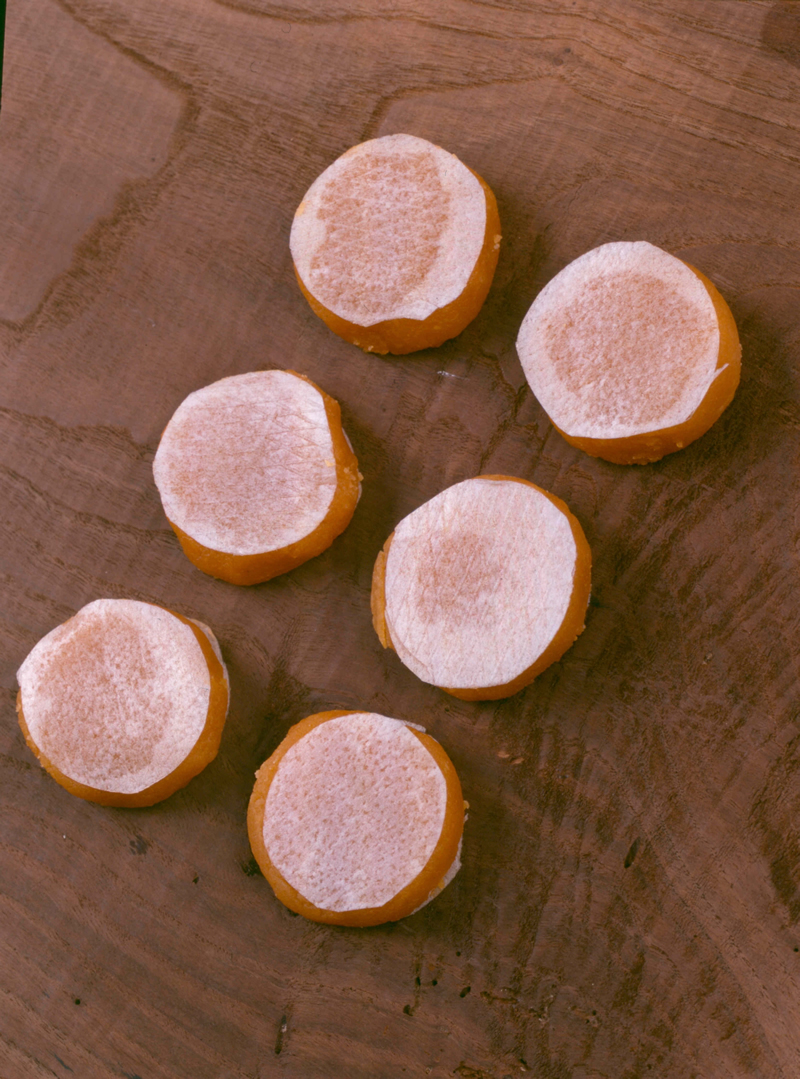
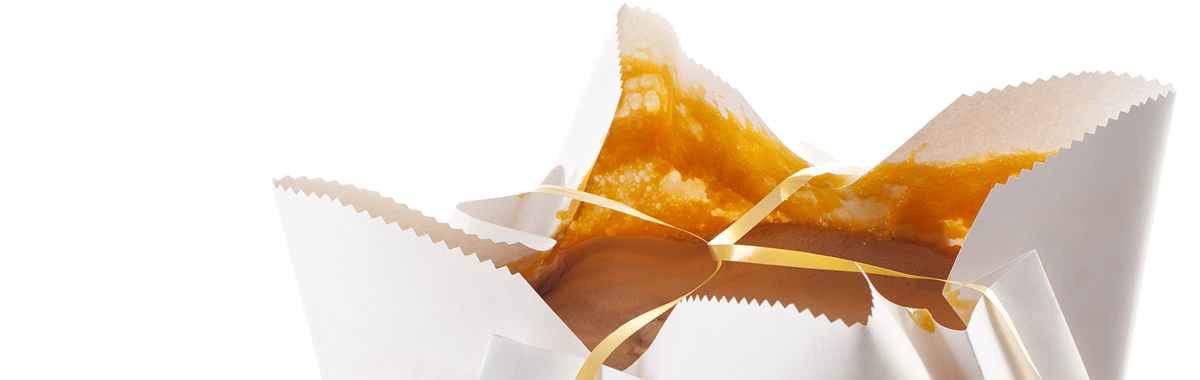
Description: Cake of about 4 to 5 cm in diameter, made with sugar, almond, egg yolks, egg whites and soft eggs. It is formed by a ring of almond paste, filled with soft eggs and limited at the base and top by wafer slices.
Region: Alentejo.
Other denominations: Queijadinhas de Hóstia.
Particularity: Small white cake, with the base and top made up of wafer slices. It is filled with egg jam (ovos moles) that give the cake a yellow hue in the central part.
History: The use of wafer, the product from which the hosts are made, is typical of sweets of conventual origin. And, like all conventual sweets, it is not possible to establish precisely the time of their "invention". It is only known that he was awarded in one of the competitions held by the Portuguese Radiotelevision and the National Secretariat of Information in the 70s. Today they are known as Queijinhos de Hóstia but their original name was Queijadinhas de Hóstia. It is said that those who pass through the Alentejo cannot fail to be seduced by such attractive names as Bolo Tão Bom, Papos de Anjo, Queijinhos de Hóstia, etc.
Use: As a treat and dessert.
Know-how: Bring the sugar to a boil with water until the point of paste is obtained. Add the finely ground almonds, egg yolks and egg whites and cook slowly. The moistened wafer is cut into slices, which are placed at the base and top of the cheeses. With the almond dough, small rings are made that are placed on the wafer slices, filled with soft eggs (previously prepared) and covered with other slices.
Source: Produtos Tradicionais Portugueses, Lisboa, DGDR, 2001
