






 Português
  English (UK)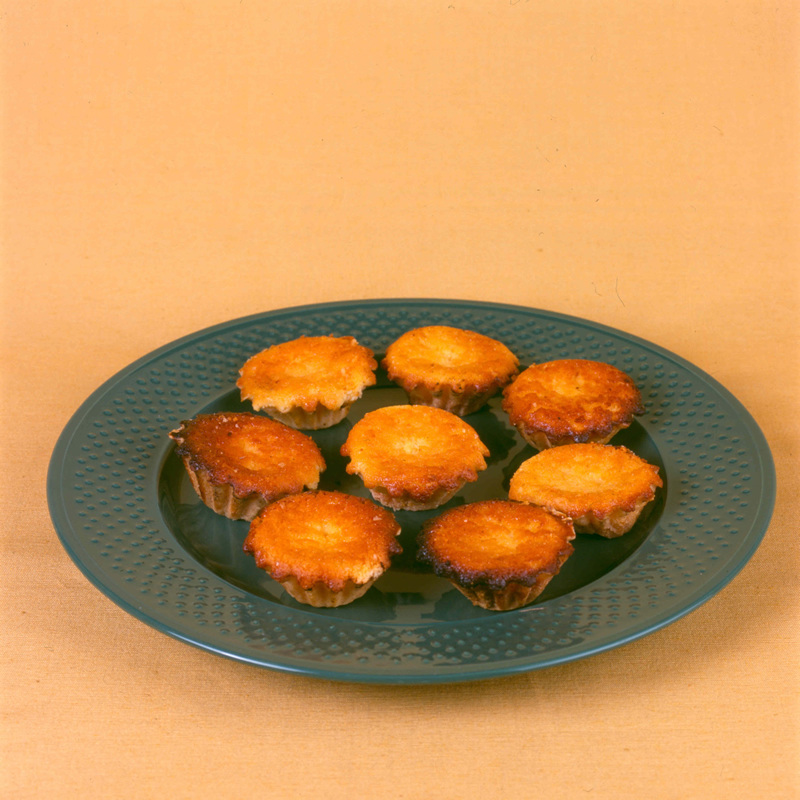
Description: Cakes consisting of a box of very thin dough, made with flour, egg, butter and lard, filled with sweet paste made with cottage cheese, eggs, sugar, butter and flour. The shapes are round, usually fluted, and have a diameter of about 7 cm and a height of 3 cm.
In the Queijadas de Évora and Queijadas de Estremoz variants, the cottage cheese is replaced by fresh sheep's cheese and the proportions vary slightly.
Region: Alentejo.
Variants: In some variants, cottage cheese is replaced by fresh sheep's cheese. Queijadas de Évora. Queijadas de Estremoz. Queijadas de Elvas. Queijadas de Vila Viçosa. Queijadas de Portalegre.
Particularity: Small molds of very thin dough, filled with a sweet paste made from cottage cheese.
History: Cottage cheese is a fresh product, difficult to preserve, having been consumed for centuries as a staple of food for mountain populations. In Alentejo, a region prodigal in conventual sweets, it began to be used in traditional confectionery recipes to take advantage of this seasonal and easily perishable product, a typical example of which is the «queijadas». In this region, the cottage cheese is drained inside a white cloth tied at the ends, becoming ball-shaped and very compact. The low water content gives the appearance and flavour of the filling of this cake, which, in certain areas, is made with fresh sheep's cheese (also a very drained product). References to queijadas were found in a recipe book of the Convent of Santa Clara de Moura and they are also included in the recipe book of S. João da Penitência (extinct on May 31, 1787, with the death of the last abbess). In a newspaper published in Évora in the 1920s, there is an advertisement for the Queijadas de Évora.
Use: As a delicacy and as a dessert in family homes and in traditional cuisine restaurants.
Know-how: The dough that lines the molds must be kneaded a lot to give it the typical elasticity and texture. The dough is made with flour, fat, egg and warm water seasoned with salt. Roll it out with a rolling pin and cut very thin slices about 8 cm in diameter to line the molds. Make a preparation with the remaining elements and fill the molds. Bake in a moderately hot oven until they are very blond. After being removed from the oven, they are usually placed with the bottom up to be very straight.
Source: Produtos Tradicionais Portugueses, Lisboa, DGDR, 2001
