


 Português
  English (UK)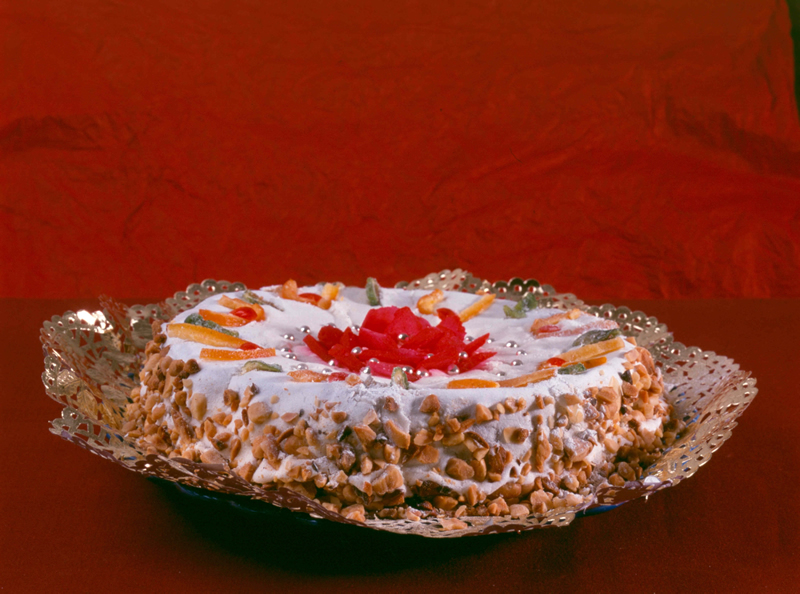
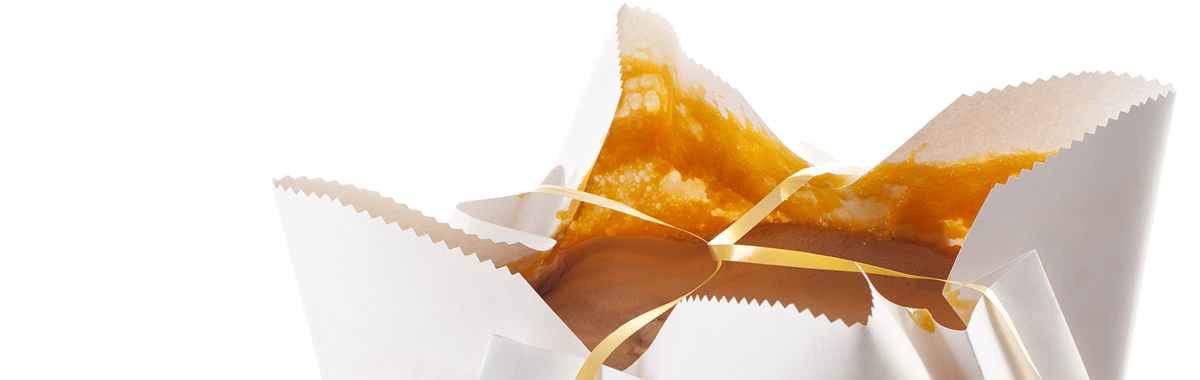
Description: Cake made with sugar, gila jam, eggs, flour and orange peel zest. It is about 15 cm in diameter. It is covered with sugar syrup, so it is white in color. It is usually decorated with flowers made with candied pumpkin.
Region: Alentejo.
Other denominations: Good As So Good.
Particularity: Circular shaped cake, covered with sugar syrup and decorated with flowers whose petals and leaves are made of candied pumpkin blades painted in different colors.
History: The city of Beja is, without a doubt, the queen of Baixo Alentejo sweets. The sweets have reached a singular degree of elaboration in this region: not only does the palate deserve the greatest care of Alentejo sweets, but also the presentation, which reveals surprising artistic gifts. This true art was mainly cultivated in convents, as they appeared as the only worthy alternative to manor houses for the reception of the entourages of important people of the kingdom, when they moved on frequent trips of power, domination or leisure. This sweet originates from the Convent of Hope, of the Carmelite nuns Calçadas, established by D.ª Colaça in 1541. It was a convent frequented by people of great resources and who had sump-tuous goods.
Use: As a dessert or at special parties (wedding, birthday, etc.) as it is a very elaborate and time-consuming decoration sweet.
Know-how: Make a sugar syrup to which the gila is added, the eggs to which 2/3 of the egg whites are removed (which are discarded), the flour and the zest of the orange peel. Grease a pan with butter, sprinkle abundantly with flour, pour the dough and bake. After cool-ing, it is covered with a sugar syrup in a hairy point. It is decorated with candied pumpkin slices cut in the shape of petals and leaves and painted in the respective colours. It is presented on a fringed or leased paper napkin.
Source: Produtos Tradicionais Portugueses, Lisboa, DGDR, 2001
