


 Português
  English (UK)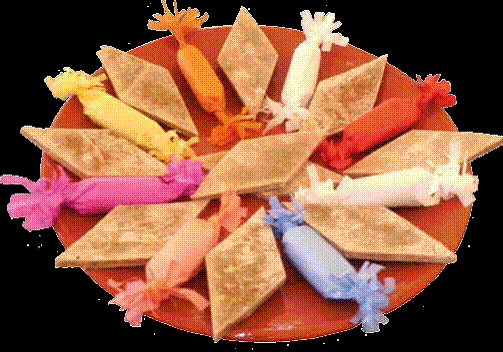
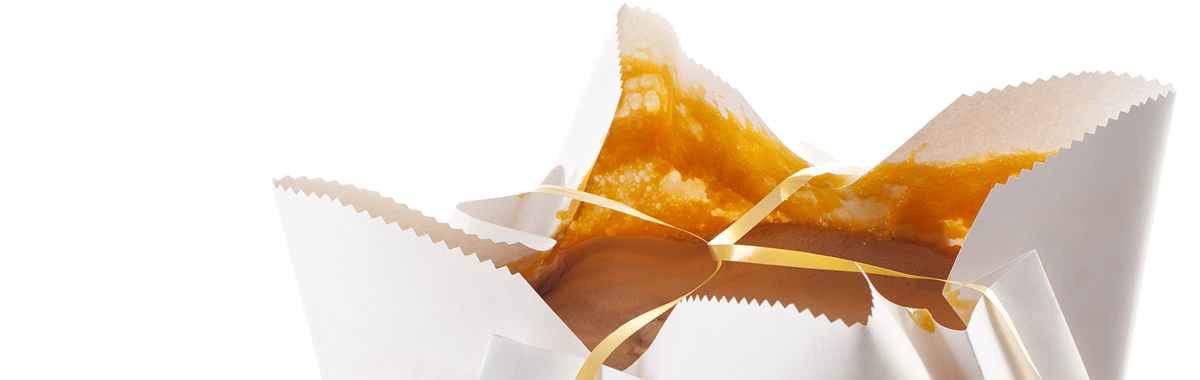
Description: Diamond-shaped candy, made with toasted wheat flour, honey and pine nuts.
Special characteristics: Unique sweet for its peculiar composition and flavor, of Arabic origin, made with abundant products in the production region: wheat flour, honey and pine nuts.
Region: Alentejo.
Ingredients: Sifted wheat flour, honey or brown sugar, water, pine nuts.
Preparation: Place the wheat flour on a baking tray and bake to toast. Bring the water to the heat with the honey or yellow sugar. When it is almost boiling, add the pine nuts. Let it boil for 15 minutes. Then add the toasted flour little by little, stirring constantly with a wooden spoon. When the dough is slightly thick, with a certain consistency, it is spread out very well on a table sprinkled with flour, with the help of a rolling pin, until it is uniform and with the desired thickness. Cut into small diamonds and let them air dry.
Know-how: When cutting the dough into diamonds, it should not be allowed to cool, so that the pine nuts do not fall. Instead of wheat flour, rolled flour was traditionally used. The roll is a coarse and dark flour, made from the episperm and perisperm of the wheat seed. It is obtained by passing wheat flour with bran through a sieve with wide meshes (Vilhena, 2000).
Forms of marketing: Traditional fairs and pastry shops.
Product availability throughout the year: All year round.
Product history: Everything leads us to believe that the origin of Alcomonias dates back to the period of Arab occupation, either because it is in the shape of a diamond, or because of the ingredients used and especially because of its name "Alcomonia". Made with a dough obtained from toasted flour, pine nuts and honey, they are a sweet with a long tradition and their presence was not restricted to the Alentejo. The word "alcomonia" is already registered in fourteenth-century documents to refer to a cake or rhomboidal jam andis also a term used in Minho to designate a type of confectionery pre-pared with honey. There is also news of his street vending in Lisbon, by the "black mussel" who also sold sesame and alcomonias.
Representativeness in local food: Sweet associated with Santiago do Cacém where it usually appears on festive days, especially at the Monte Fair and the Santo André Fair, on the 30th of November.
Source: DGADR, based on the book Receitas e Sabores dos Territórios Rurais, MINHA TERRA, 2013 e em Vilhena, Maria da Conceição (2000), “Reminiscências árabes na doçaria portuguesa – As alcomonias”, ARQUIPÉLAGO-HISTÓRIA, 2ª série, IV - N.º 2, pp. 625-634.
Photo: Provided by MINHA TERRA – Federação Portuguesa de Associações de Desenvolvimento Local.
