

 Português
  English (UK)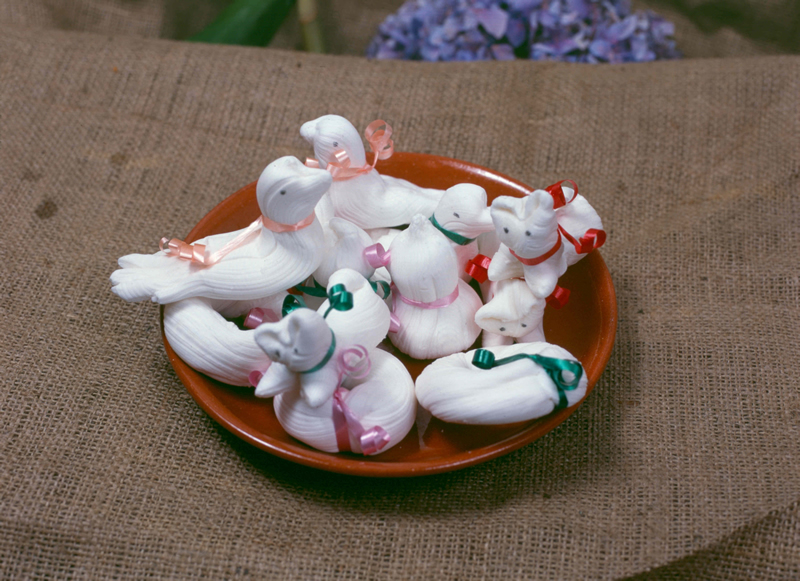
Definition of the geographical area of production: Santa Maria Island, Azores.
Ingredients used: 1 kg of sugar; 1 tablespoon of white wine vinegar; butter.
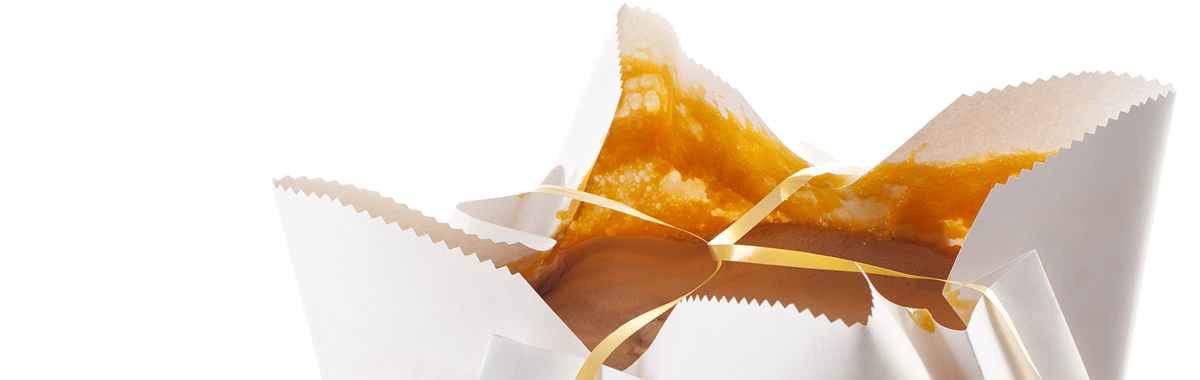
Preparation: Bring the sugar to the heat with 4 dl of water and vine-gar and let it boil until it makes a soft ball point (tight pearl). Pour the syrup into a metal container greased with butter and inside another container with cold water. The sugar begins to cool on the sides, which is why sometimes it becomes necessary to pull this sugar in with a knife. As soon as the heat allows, stir the sugar with your hands, start pulling it out, stretching it and giving it the shape of a skein, folding it and stretching it again until the sugar is very elastic, opaque and white. Divide the dough into pieces, cutting it with scissors, and work the alfenim while warm. To preserve the mouldable pieces of alfenim (without cooling completely), they are kept in the oven or under the intermittent action of a (electric) heat radiator. With the alfenim mould animals, flowers, etc., with which other cakes are artistically decorated. It is also eaten like candies.
Know-how: Legs, arms, throats, human figures, doves, cows, small doughnuts, flowers, fruits, imitation of some utensils (baskets) and everything that the person wants to do with that skein still hot. If it is not hot, you cannot mold the figures.
Product availability throughout the year: available all year round.
History of the product: it is a medieval sweet of Arab origin, which still persists in the central islands of the archipelago, especially on the island of Terceira. The dough, made of sugar, water and a little vinegar, requires mastery to be shaped and gains figures of flowers, animals and doves. It arrived in the Azores with the Moors who set-tled there, and took advantage of the high production of sugar cane in the region. Incorporated into conventual sweets, it was offered as a luxurious gift to distinguished people and essential as a decoration on wedding tables. It is also traditional in the Holy Spirit Festivals. In the festivities, it appears in shapes that represent parts of the human body, as a way of thanking for miracles obtained. The sweet reached Brazil, where it is still made by confectioners in the city of Goiás Velho.The alfenim on the island of Terceira, when it is an offering to the Divine Holy Spirit, stays in the Empire until it is bought by a person who is easy to raise funds for the Brotherhood. Nowadays, the microphone is used and the piece of alfenim is proclaimed in a loud voice until someone gives the best share and keeps it. The Alfenim was traditionally a luxury offering, a treat with which different people were gifted, essential in the decoration of the bride and groom's ta-ble, not to mention the promises, in which it took the shape of the diseased organs. These ex-votos were then offered at Sunday Mass to the invoked saint: for example, St. Blaise in throat affections, St. Amaro in problems related to legs and arms, St. Anthony in the illness of a domestic animal.
Availability of the product (in extinction, continuous supply, re-covery): In the pastry shops of Angra do Heroísmo, in the Impérios of the Parishes on the occasion of the Festivities in honour of the Divine Holy Spirit and other religious festivals for the payment of prom-ises.
