












 Português
  English (UK)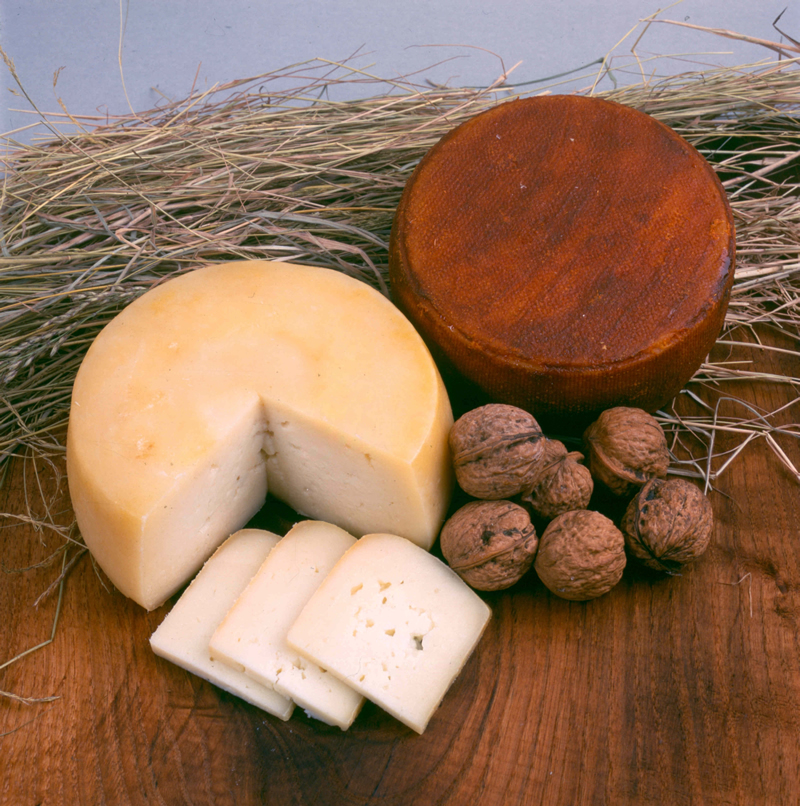
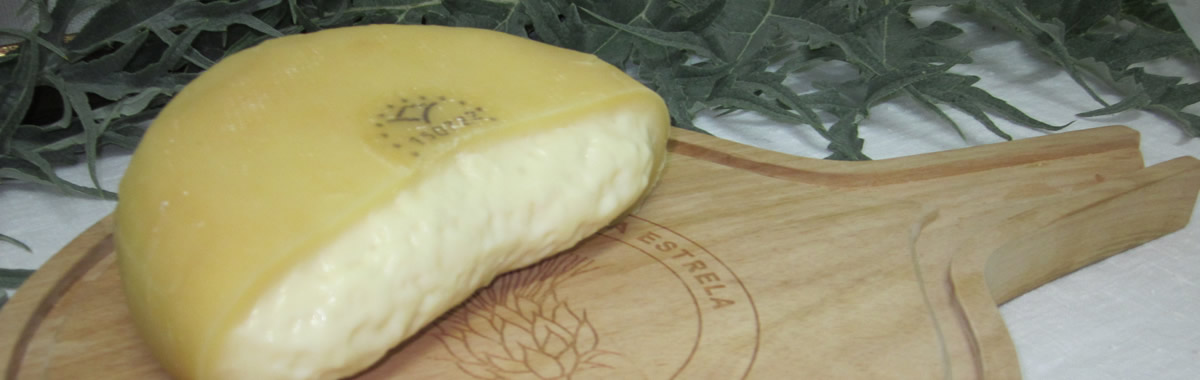
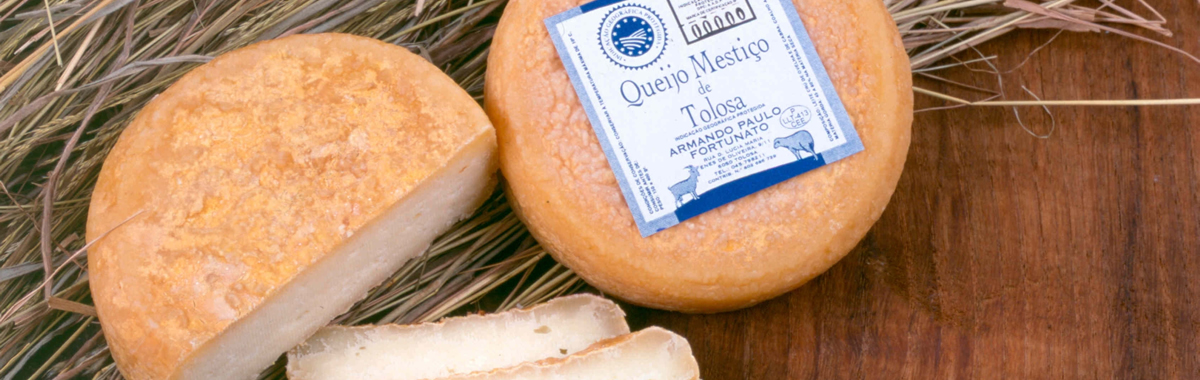
Description: Fresh goat cheese is produced from goat's milk, subjected to heat treatment and coagulated with animal rennet. It has a cylindrical shape and a weight of less than 150 g. Dried cheese is obtained from fresh cheese that has not been marketed by salting it by placing a layer of salt on the surface of the cheese and then being dried at room temperature. It has a shape identical to that already described for fresh cheese and a weight of about 100 g. The cured cheese is of semi-hard to hard paste, has a cylindrical shape and varies the weight and dimensions with which it is marketed, alt-hough it rarely exceeds 12 cm in diameter, 4 cm in height and 1 kg in weight. The appearance of the crust is variable, with the faces and edges usually flat or slightly irregular and the edges marked. The paste is firm, closed or with small eyes irregularly distributed, and its color white or slightly yellowish. The flavor and aroma are characteristic, preventing it from having a pronounced taste of goat's milk.
Region: Center.
Variants: Fresh cheese, dried cheese and cured cheese.
Particularity: Cheese produced with extreme goat's milk.
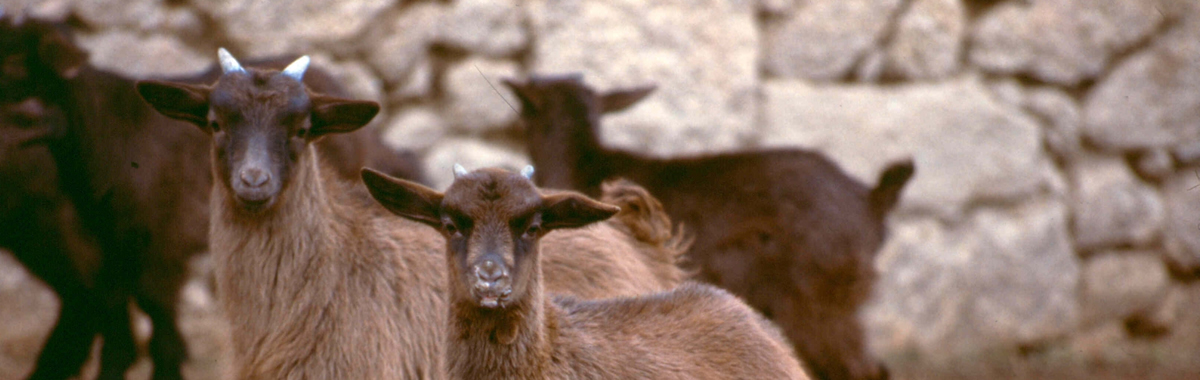
History: The production of artisanal goat cheeses in this region is quite old. In fact, in the mountains of Caramulo, Gralheira, Buçaco and Lousã, the production of goats is quite common, since the pas-tures in the region are insufficient for the production of other less rustic livestock species. This is how 35% of the national goat herd is found in this region. The milk of these animals played a preponderant role in the diet of the populations of this region, and the production of cheeses was a way of preserving this product over time, which, when marketed, allowed to guarantee an income to the farm. The cheeses were produced by the action of the curd on the raw milk which, after slight draining, was introduced into molds. The product was sold in the curd phase or allowed to dry and was salted and dried, being marketed later.
Use: Goat cheeses are highly appreciated as a starter, dessert or even as a light meal.
Know-how: Legal restrictions (Ordinance No 861/84) have led to a variation in the production technology of fresh goat's cheese. Thus, the milk, after being filtered, is subjected to heat treatment equivalent to pasteurization, and is then cooled to 28-31°C and coagulated with animal rennet. Subsequently, the curd is cut and, after the outcropping of the whey on the surface, it is introduced into molds of variable size, being gently subjected to manual pressure. Dry cheese is obtained by the same process. However, instead of being sold fresh, it is salted and dried for a while at room temperature. The technology of cured goat cheese is similar to that of sheep's cheese, that is, the milk is curdled with animal rennet, obtaining curd, which is molded and then salted, and then placed in curing chambers where the maturation process takes place.
Source: Produtos Tradicionais Portugueses, Lisboa, DGDR, 2001
