

 Português
  English (UK)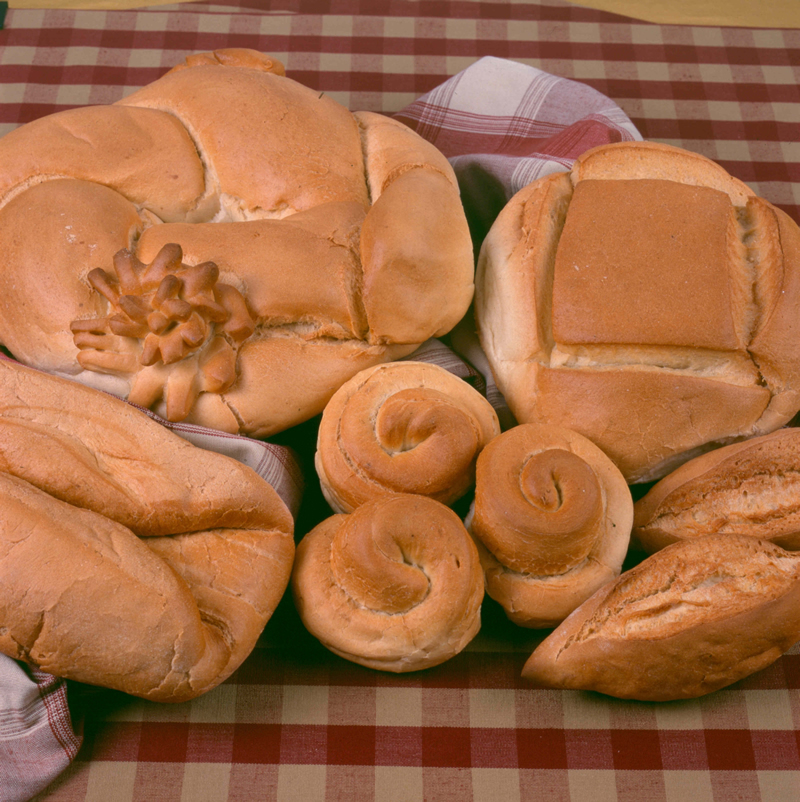
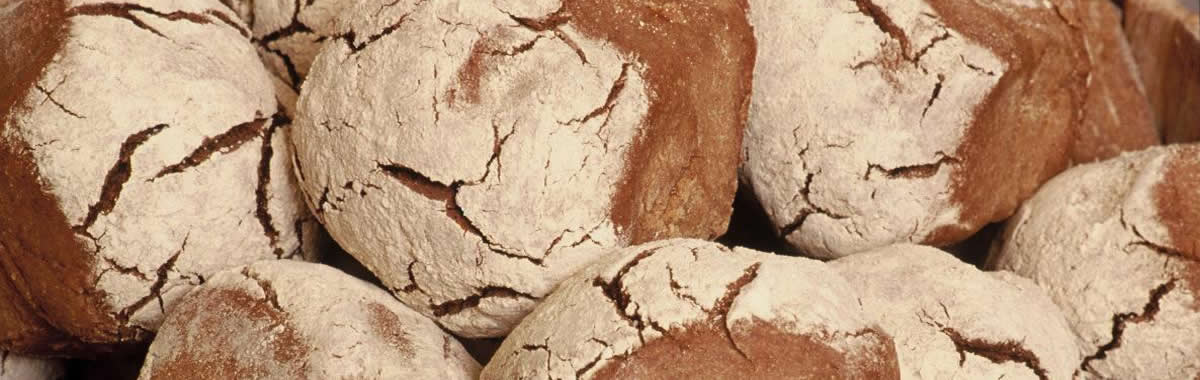
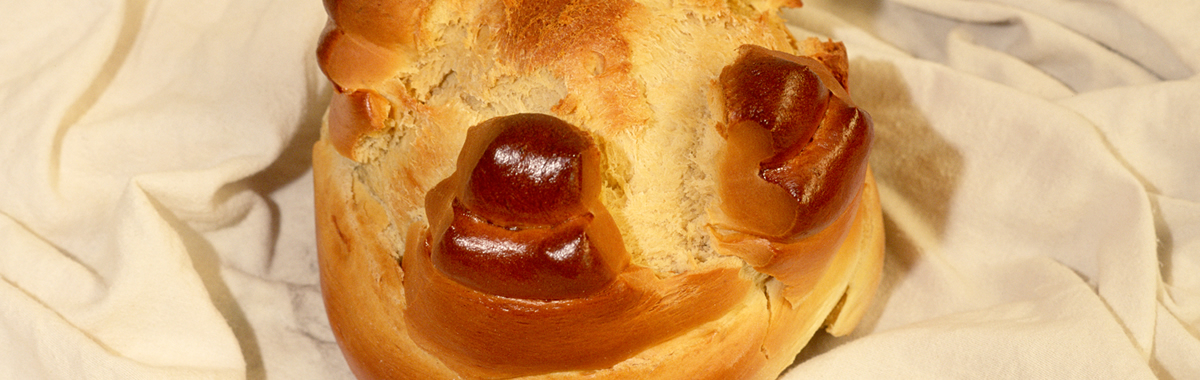
Description: Bread with a smooth crust and a very closed and regular crumb, typical of the kneading process to which the dough is subjected. It comes in a different shape and weight depending on the regions where it is produced. The most common forms in which it is presented are: Spouts (small units finished in a nozzle with a longitudinal cut); Regueifinhas (units with about 0,5 kg of snail-shaped dough); Regueifas (two sticks two palms long, plaited, with the final shape of a plaited ring and the surface decorated with donuts, rings and leaves); Callus (elongated mass whose ends are joined in the middle and creased with the hand in a cleaver); Redondo (dough flattened on biscuits whose surface is made into a square).
Region: North.
Other denominations: Pão Arregueifado.
Variants: Round bread (in the border areas of Beira Alta). Pão de calo (in the Baixo Alentejo and Algarve area).
Particularity: Bread obtained from very hard dough, which in order to be bound has to be compressed by means of appropriate instruments (currently called kneading cylinders).
History: The history of the manufacture of this bread is very old in Portugal. Dating back to the beginning of Portugal as a nation, there are instruments used for the manufacture of this bread (hardwood cleaver connected to a wooden board, the cleaver working as a lever to turn the dough on). In the Middle Ages, for the same purpose, wooden rollers moved by a system of cogwheels were used. Nowadays, wood has been replaced by metal rollers. This bread, given its great conservation, was used by Portuguese navigators, who consumed it in the form of biscuits or clubs, later cut into slices and toasted.
Use: Consumed at breakfast and in intermediate meals. It is very common to see people, on feast days and pilgrimages, with the Regueifas tucked in their arms. It is customary for godchildren to offer them to godparents for Easter.
Know-how: A bread dough is prepared with flour, salt (in small amounts) and about half the water usually used to make bread dough. It is allowed to rise and knead the dough to remove most of the gas produced. To this end, the dough is divided into small units that are rolled into a stick (or compressed with cylinders) from which the loaves of bread with different shapes are tended.
Source: Produtos Tradicionais Portugueses, Lisboa, DGDR, 2001
