





 Português
  English (UK)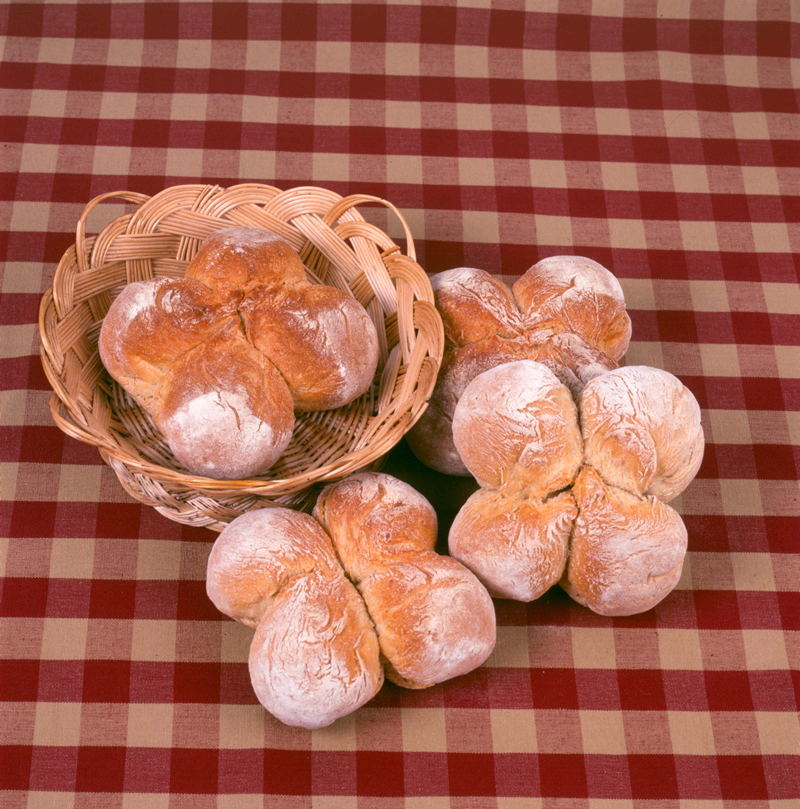
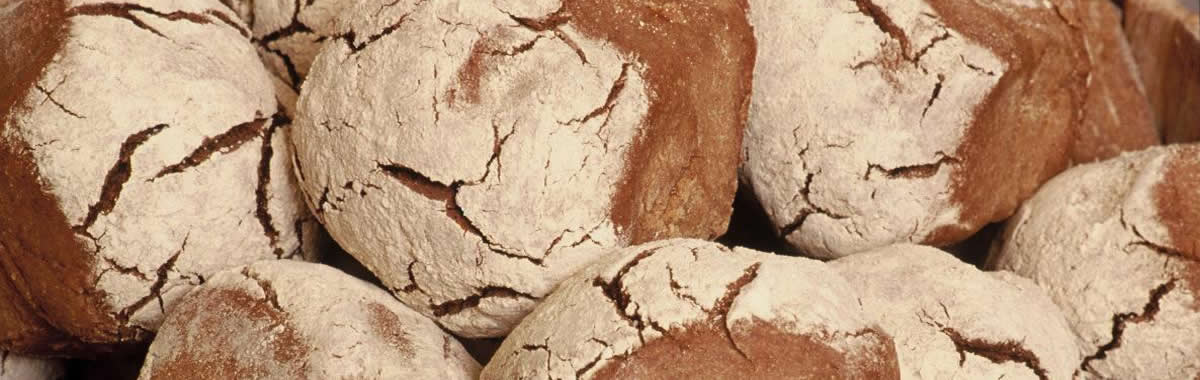
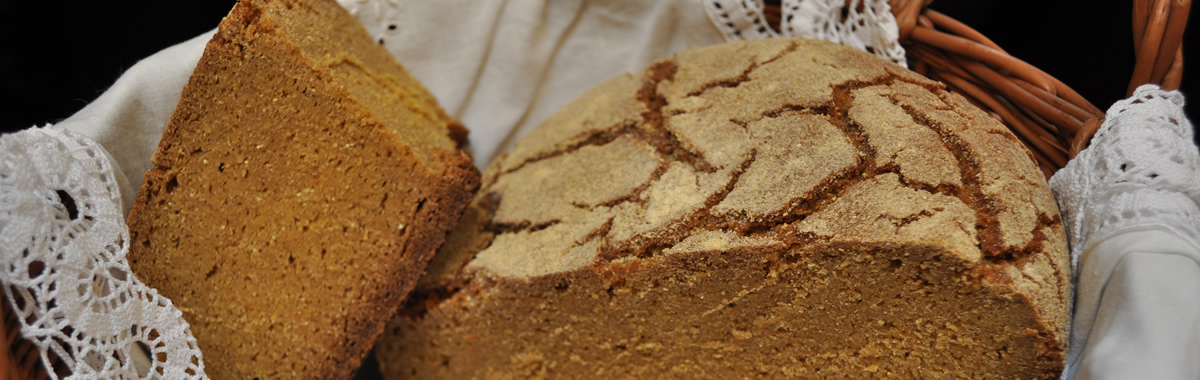
Description: Bread made of rye and wheat flour mixture of about 10 to 15 cm diagonally, with an average weight of about 150 g and a height of about 5 cm. Its colour is crisp-yellow and has a firm and smooth consistency.
Region: North.
Other denominations: Pão de Ovelhinha.
Particularity: It is a bread of mixture of rye and wheat, with four corners and central choke, appearing in the shape of four diamonds joined.
History: The name of Padronelo's Bread comes from the parish of the municipality of Amarante where, in the place of Ovelhinha, it initially began to be manufactured. This place is located next to the Ovelha River, with several traditional mills, some still in operation. During the second French invasion (1809), the place of Ovelhinha was completely destroyed, and the bakeries were rebuilt in higher places, where they still operate today. It is, due to its shape, known as the «bread of Concord».
Use: It is a bread usually consumed in the region of Amarante, usually accompanied by slices of homemade smoked meat. It is a familiar bread since its shape makes it easy to divide into four, which allows as many people to serve each other simultaneously.
Know-how: Bread made according to traditional methods and baked in a wood oven. The flour is ground in traditional mills, and then sifted and kneaded with water, salt and yeast. Rises about 2 h. It is kneaded again by hand, at which point it is given its characteristic shape: a quadrilateral that is strangled according to the medians, giving the appearance of coarse rhombuses, wider in the connection area and pointed at the ends. The bread dough is then "couçada" (leaven covered with blankets). Meanwhile, the oven is heated for 1 hour with wood. Then the bread is baked for about half an hour.
Source: Produtos Tradicionais Portugueses, Lisboa, DGDR, 2001
