



 Português
  English (UK)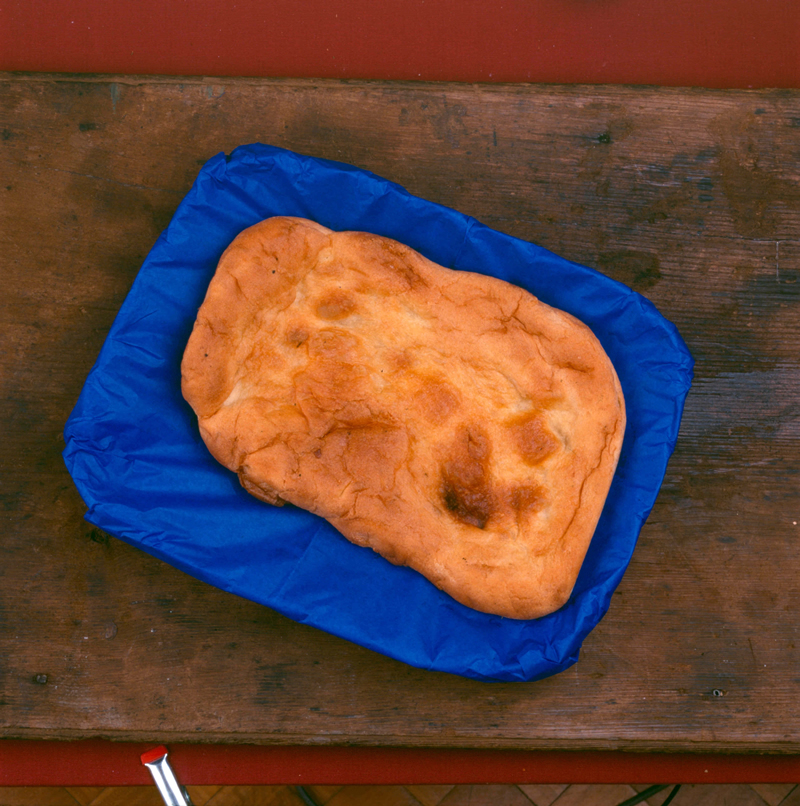
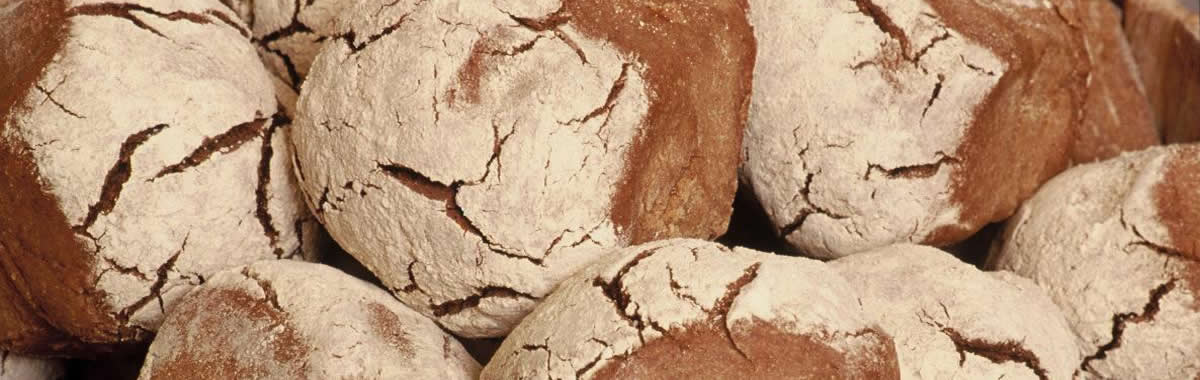
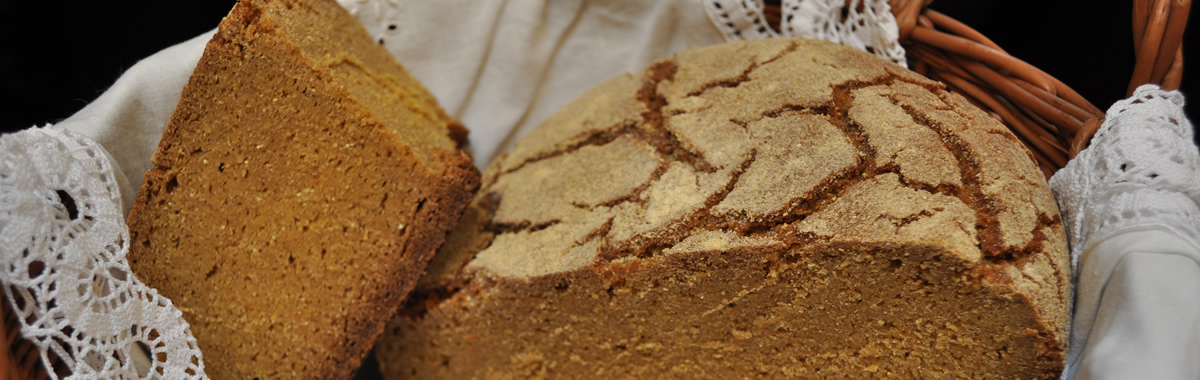
Description: Bread made from wheat flour, with salt, baker's yeast, brandy and olive oil from the region. Its inner appearance is porous and coarse. It is about 40 to 50 cm long and has a height of 2 cm, which can reach 4 cm at the ends. It weighs between 250 and 350 g.
Region: Center.
Particularity: Bread with a flat and elongated shape, with rounded ends. It is slightly concave lengthwise and has a relatively crispy crust, with a floury and greasy appearance. It has a dark pearl-white color.
History: It is a regional product, typical of the district of Guarda, particularly the parish of Pêga. From here it later expanded to the entire municipality of Sabugal.
It is a holiday bread, more specifically the feast of All Saints (the fact that gave it its name), a time when in these lands it is common for godparents to offer Santoro Bread to their godchildren, in the same way that in other areas of the district of Guarda the Folar da Guarda Cake is offered for Easter. The reason for the offer of Santoro is well proof of the status that this bread has, as opposed to the dark rye or corn bread, considered as the daily food of farmers. Already in a memoir it was said: «the poorest godparents only give vintém cakes to the godchildren, which consist of simple bread cakes, whose dough is flattened and greased with olive oil before going into the oven.»
Use: As a food mainly of a regional nature, as it must be consumed before 48 hours after its manufacture.
Know-how: The making of these breads still persists in some villages with a tradition in the area of baking. Mix the ingredients and knead with water. Cover the dough with white cloths and let it rest. The room where the kneading is done must be heated to facilitate the next operation, which consists of letting the dough rise. Then the bread is tended to a long, flattened pan, slightly compressed in half. It is floured well, greased with olive oil and baked in a wood oven at about 250 °C. The oven temperature has an influence on the final appearance of the product. At the end of cooking, it can be brushed again with an abundant amount of olive oil.
Source: Produtos Tradicionais Portugueses, Lisboa, DGDR, 2001
