



 Português
  English (UK)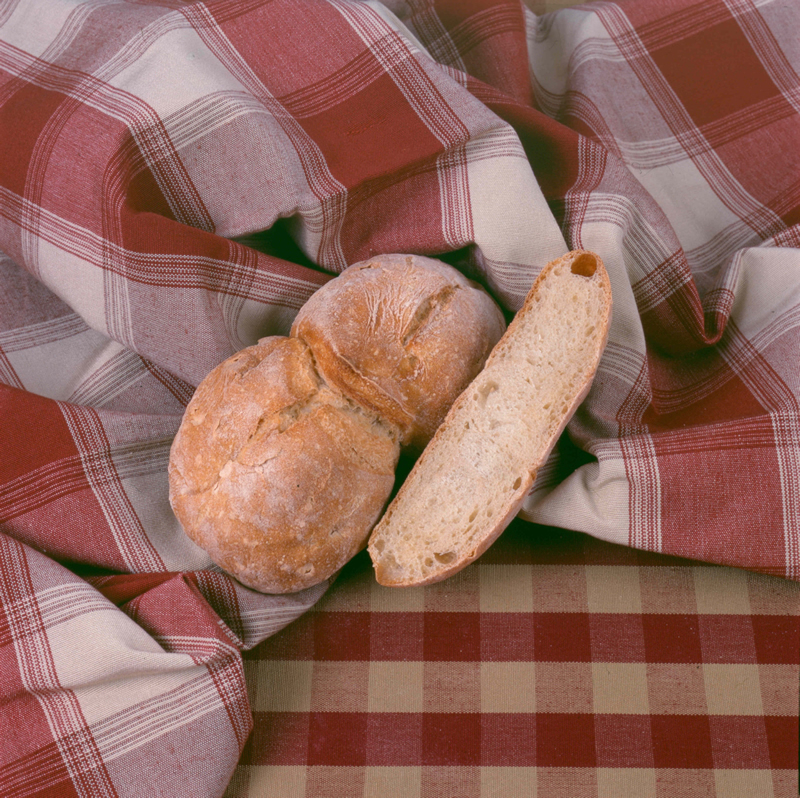
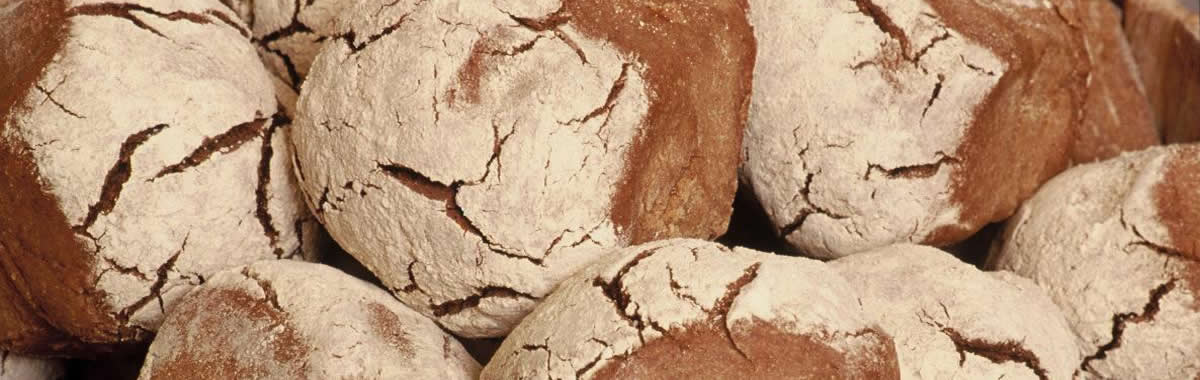
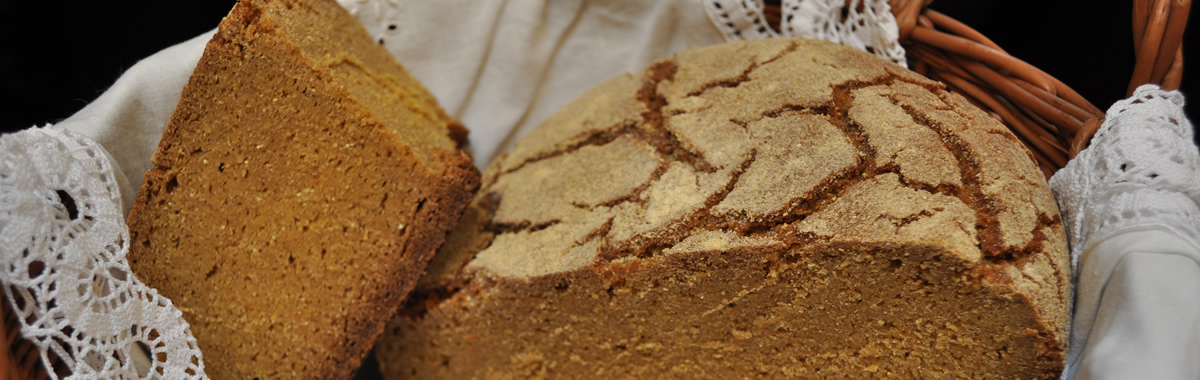
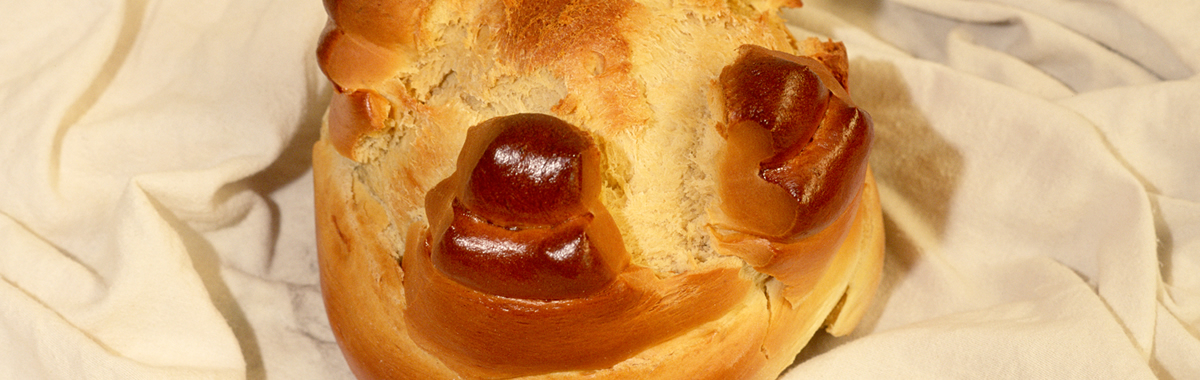
Description: Bread obtained from a very soft dough. It comes in three variants: 'white' when using type 55 flour, 'ordinary' when using type 65 flour and 'dark' when using type 80 flour. The crust is floured, made of very soft dough and sticks when handled, light and crispy in color. The crumb is irregular and «fevered», typical of a very soft, moist, elastic and coagulated dough. The taste is sharp and slightly acidic.
Region: Center.
Variants: White wheat bread in 'padas'. Wheat bread in "padas". Dark bread in "padas".
Particularity: Rustic bread, consisting of two small units (about 50 g) superimposed at one end.
History: Bread is made from a dough kneaded by hand, slowly and slowly, as the bakers of various locations in the district of Aveiro did, namely in the region of Ílhavo.
Use: To accompany main meals.
Know-how: Slow kneading starts with about 60% water in relation to the flour and adds cold water up to 70%. Only after all the water is absorbed is the crumbled yeast added. Add the fine salt after the dough has dried. Finally, the "old dough" is added. The dough is divided into units that are rolled up and arranged on a floured canvas, overlapping two and compressing with the thumb to join them. The dough ferments slowly as it should take more than 3 hours from the beginning of kneading to infornamentation. Cooking is done in an initially strong oven, without steam, whose temperature drops quickly and sharply. It is this long cooking that gives the crust the characteristic of being crispy (up to at least 3 hours after cooking).
Source: Produtos Tradicionais Portugueses, Lisboa, DGDR, 2001
