




 Português
  English (UK)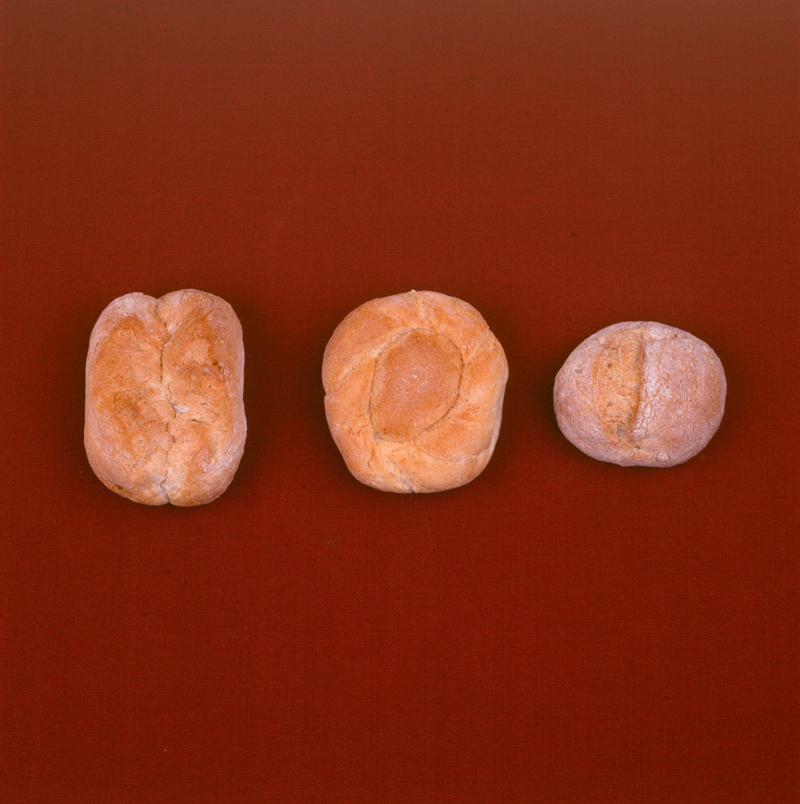
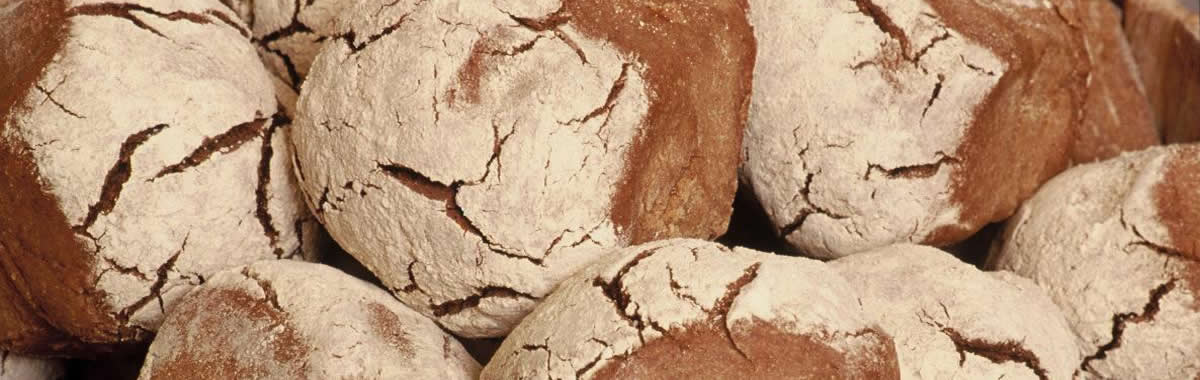
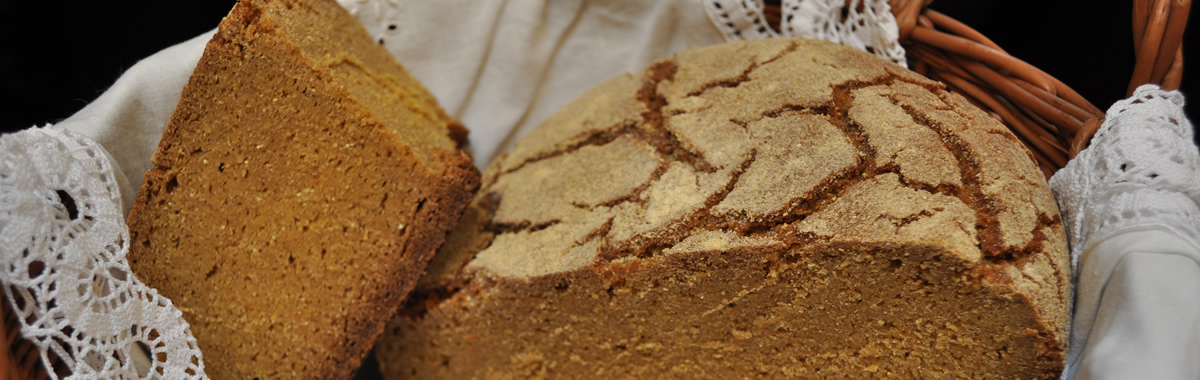
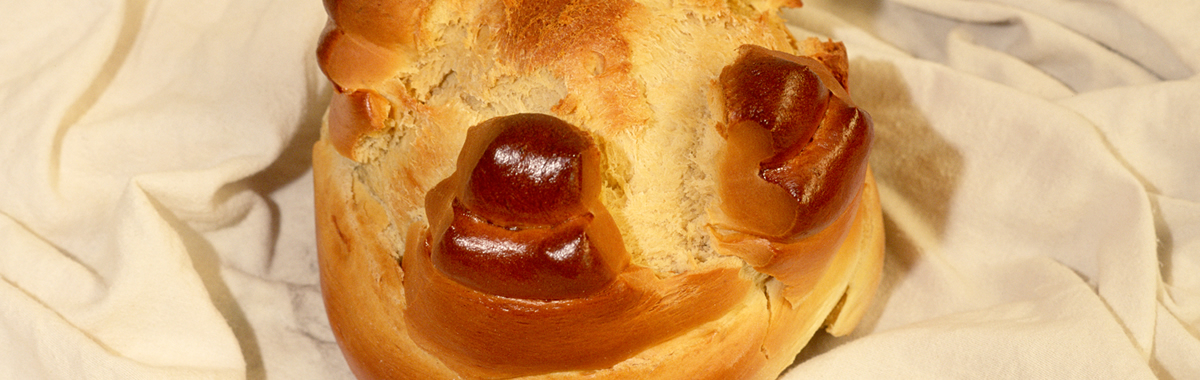
Description: Carcass — Slightly elongated bread, creased in the middle, with a very fluffy crumb and crispy crust; Bijou or Molete — round bread broken at the place of the cut made before baking; Papo-seco — slightly elongated bread, creased in half and finished in small heads (the breasts); Rosca — elongated bread made of two twisted strips of dough, with a rough, crispy crust; Viana — very fluffy round bread that is tended with urdo facing the middle.
Region: Lisbon and Tagus Valley.
Other Denominations: Carcass (Lisbon and Tagus Valley). Bijou or Molete (Between Douro and Minho; Papo-seco (Ribatejo, Alentejo and Oeste). Rosca (Greater Lisbon region. Viana (Greater Lisbon region).
Particularity: Small bread with a fluffy crumb, obtained through poor and very fermented doughs that give it a very captive bread flavor.
History: Although all over the world, small bread is a much more expensive bread, in Portugal, for political reasons (corporatism, etc.) and due to the mechanization idealized in the country, it has become the "bread of the people".
Use: Widely used at breakfast or in light meals. You can also replace a good meal.
Know-how: A dough is made with flour, water, salt and yeast. After a short rest, it is divided by weighing into several parts, «empelos», which after a new rest are divided again. Each of the units thus obtained is then mechanically wound. The dough is then placed on a 'rolling tendedeira' screen table where it rises and is able to be formed:
— for the Carcass, a Portuguese design and construction 'creasing head' is used at the end of the conveyor table, so that each unit is creased by plastic wheels installed in parallel;
— for Bijou, the unit is rolled up and stored on 'roller shutter trays' screens, also of Portuguese design, and is cut on its side, in the middle of the leavening, with a very sharp blade, the final sealing being carried out with the units inverted;
— for the Thread, roll the unit on the forming table, lengthen until it ends in a beak, cut in half to near one of the ends that is fixed to the table with a weight, then twist and braid simultaneously.
Source: Produtos Tradicionais Portugueses, Lisboa, DGDR, 2001
