


 Português
  English (UK)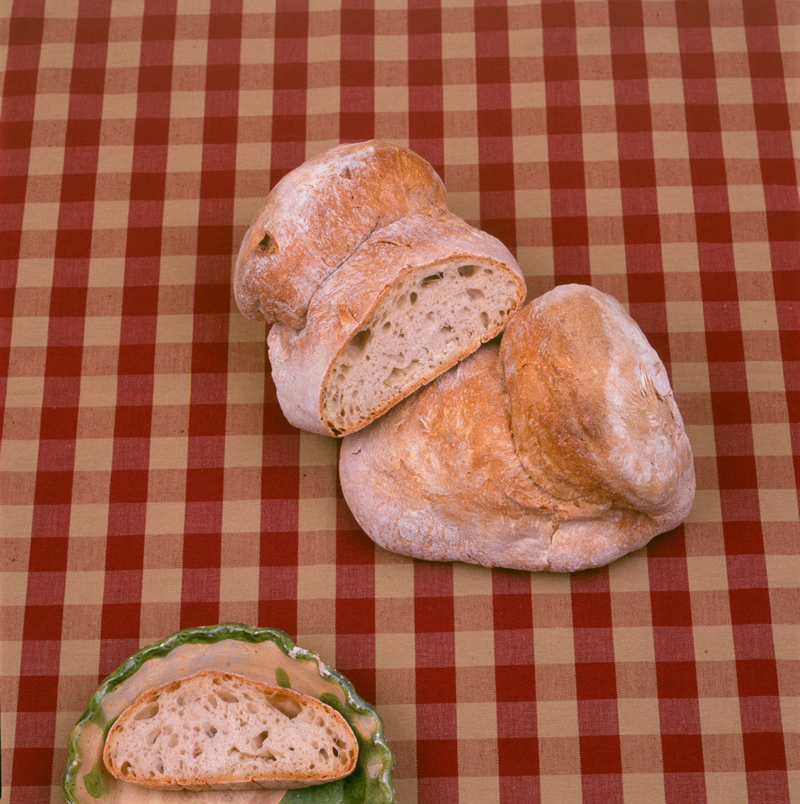
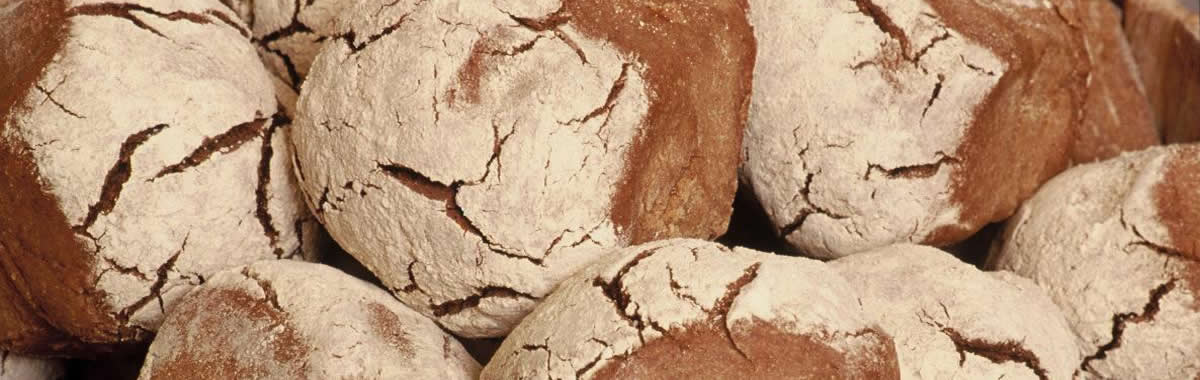
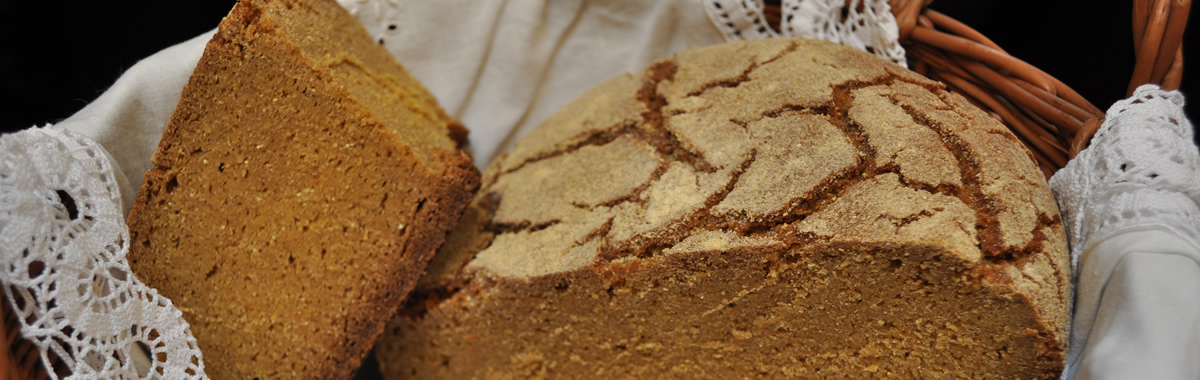
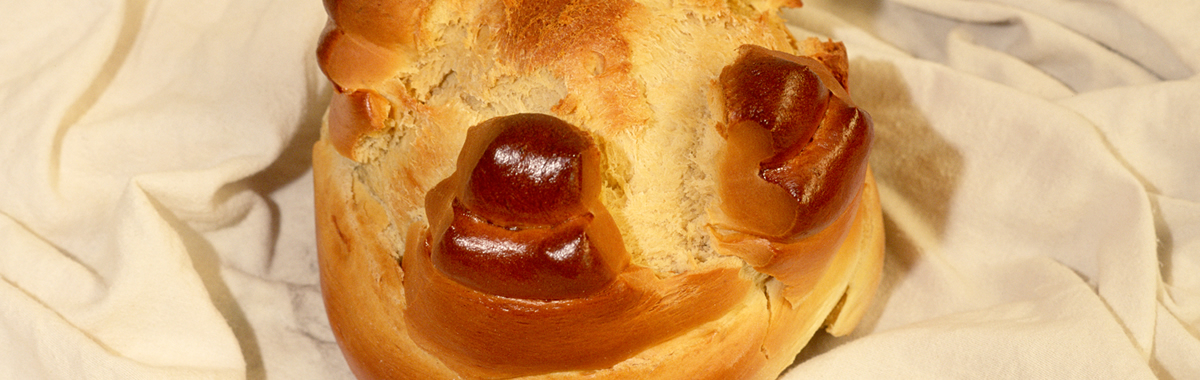
Description: Bread prepared with wheat flour, yeast, salt and enough water to knead. It weighs between 1 and 1,5 kg. It is a forehead bread (more raised at one end, resembling a fold) and has a light brown crust and a whitish crumb.
Region: Alentejo.
Other names: Alentejo Bread.
Special feature: Wheat bread, baked in a wood oven.
History: Although it seems that it was the Romans who introduced cereals to the Alentejo (making this province the breadbasket of Rome), it was the ingenuity and art of the Arabs that gave us the ability to transform the cereal into this bread so dear to the Alentejo. This is due to the engineering art of the Arabs who, living in this region, introduced watermills and water-wheelers into it. Bread was, and still is, the basis of the Alentejo diet, in which it plays a primary role, «filling the belly». Lúcio Camacho writes that "... a good piece of bread, a piece of bacon or sausage, or even a handful of olives and a few sips of water from the enfusa, and the rural was often prepared». João Caldeira recalls that «bread was a venerated food... so it was blessed in the bowl where it leavened and... so it was a crime to let it fall to the ground.., it was the "panito", a diminutive referred to with all affection... nothing could be eaten without bread... that which accompanied it was called conduit, because it led to it».
Use: In the Alentejo, bread is not only food in itself, but is also part of almost all dishes of regional cuisine, whether savory or sweet. It is a well-established and recognized fact that açorda alentejana cannot be made with any other bread. The same can be said for migas, cachola soup or dogfish soup.
Know-how: Once the wheat has been ground and well sifted, the flour and bran are obtained. Pour the wheat flour into a clay bowl, make a hole in the middle, add the homemade yeast (leftover from the dough from the previous kneading) and begin to knead, adding warm water, where a small handful of salt has been dissolved. This mixture is very well kneaded, turned, beaten and beaten against the walls of the bowl. When the dough is light, that is, when pieces are removed without difficulty, it is ready to rise. It is smoothed over with the floured hand and with the cleaver of the hand a cross is drawn saying "T'arrenego, Devil". A mark is made with a strip of dough three fingers from the edge of the bowl. It is covered with a cloth and a blanket and, in winter, a brazier is placed under the bowl to give it warmth. When the dough rises until the signal (about 5 hours) it is ready to roll out the bread. The fermentation time depends, curiously, on three factors: a human one, kneading; the second, the time of year; and the third, perhaps less important than the previous ones, the yeast used. When the oven was not their own, the women placed the tended breads on a wooden tray, separated by pleats made in the panal; the furnace set the time of firing and charged for its work in «kind» (called «poia» in the Alentejo) and rarely in cash. He kneaded normally only once a week.
Source: Produtos Tradicionais Portugueses, Lisboa, DGDR, 2001
